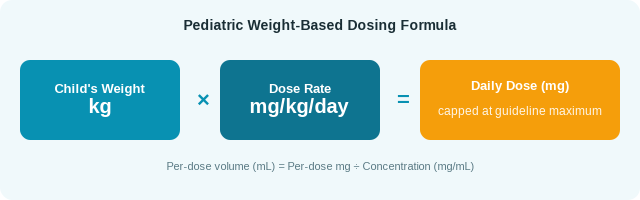
Children are dosed by weight, so the right amount of a medicine depends on how much the child weighs, which drug it is and how the liquid is made. These guides explain weight-based dosing, antibiotics, steroids, reflux medicines and anti-vomiting medicines in plain language, and each one links to the matching dose calculator. They are educational; confirm every dose with the prescriber or pharmacist.
Children are dosed by weight, not age. Learn why mg/kg dosing matters, how max-dose caps work, and why a 10 kg toddler and a 35 kg child get very different amounts of the same drug.
A practical guide to the most commonly prescribed pediatric antibiotics — Augmentin, cefdinir, azithromycin, clindamycin, and more — with dosing principles and when each is used.
Augmentin and cefdinir are both used for pediatric ear infections and sinusitis. Learn the key differences in spectrum, side effects, dosing frequency, and when your child's doctor might choose one over the other.
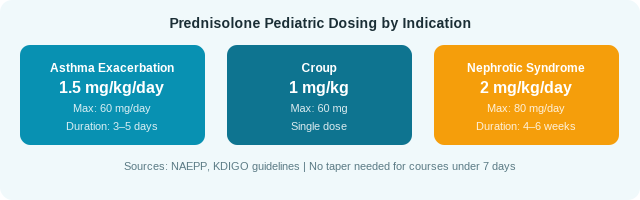
Learn when prednisolone is prescribed for children, how weight-based dosing works for asthma, croup, and nephrotic syndrome, and what side effects to expect from a short course.
Azithromycin is prescribed for pediatric pneumonia, pertussis, and strep throat in penicillin-allergic children. Learn how the 5-day weight-based dosing schedule works and what side effects to watch for.
Most childhood respiratory infections are viral and won't respond to antibiotics. Learn which conditions actually require antibiotic treatment, which don't, and what criteria pediatricians use.
Ondansetron (Zofran) is prescribed for nausea and vomiting in children, including gastroenteritis. Learn the weight-based dosing, when it's appropriate, and why a single dose often works.
Omeprazole (a PPI) and famotidine (an H2 blocker) treat acid reflux in children differently. Learn how they work, the weight-based dosing for each, and when each is preferred.
Metronidazole treats anaerobic bacterial infections and parasites; clindamycin covers MRSA and anaerobes. Both are dosed by weight with different dosing intervals and formulation challenges.
Three commonly prescribed but often misunderstood pediatric medications: dexamethasone for croup and asthma, Bactrim for UTIs and MRSA skin infections, and cefuroxime for ear infections and sinusitis.